Showing posts with label copper pipe manufacturers. Show all posts

Sunday, 26 August 2018

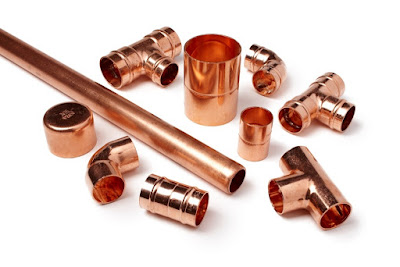
Top 8 Advantages to Using Copper Plumbing Fittings

Copper Plumbing fittings are the first choice of building contractors and homeowners. They are used in offices, homes, schools, colleges in short you will find them in every place. The reason is the trust it has developed over the years. The copper pipes are known for the high quality and durability. Let us take a look at the top advantages of using copper plumbing fittings in residential as well as commercial projects.

1.  Affordable:

It comes up as the most affordable plumbing material. When you compare it with other material available in the market then you will find that you are getting high quality material at a very competitive price.

2.  Increase Resale Value:

The home with copper plumbing fittings will help you get good resale value. The buyer knows that copper fitting means reliability. They know that they don’t have to incur any expense on them if they buy the house. Hence, it is advantageous to both seller and buyer.
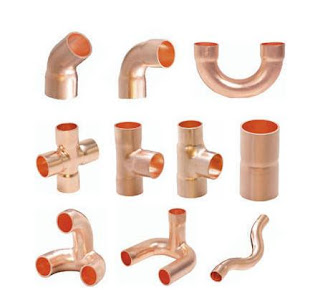
http://www.ganpatiengineering.com/copper-pipes.html

3.  Enhances Performance:

The premium quality copper pump enhances the performance of the plumbing system. It is one of the materials that gives you trouble free performance for years. It hardly requires any maintenance and continues to give incredible performance for years.

4.  Durable:

When it comes to durability, copper wires beats other materials hands down. It is resistant to corrosion and harmful ultra violet rays. The copper pipes scores here as these are two most common reasons for wearing of water fitting system. Another remarkable feature is that it remains unaffected with variations in water pressure. The climate also doesn’t have any effect on it. These fittings doesn’t become fragile and break with time. Also, there is no probability of crack. The copper wires easily lasts for decades, it gives you trouble free performance. The only thing you need to make sure is that you get the plumbing done from a professional plumber.

5.  Fire Resistant:

The copper pipes are fire resistant. In case of fire it will not melt, break or burn. It can easily withstand the toxic gases released during the fire. It is a big plus point because others made of plastic will not only melt but can also suffocate the occupant of the home. Safety of near and dear ones is always a priority so you can trust copper fitting completely here.

6.  Easy to work:
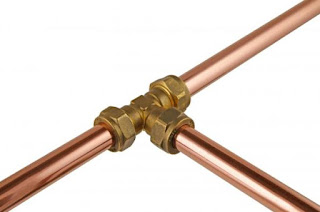
http://www.ganpatiengineering.com/copper-pipes.html

The plumbers around the world love copper pipes as it is easy to work with. It can be easily bend during the installation. It means the less need of fasteners and other joints.  This reduces the installation cost.

7.  Recyclable:

Copper is easily recyclable hence it is environmental friendly. It is hundred percent recyclable. If you support go green then it comes up as the best option. Although, the question of recycling only comes up when it wears off but that is rare, as it easily last for 50-years.

8.  Completely safe:

The copper pipe doesn’t possess any health threats. It doesn’t rust like iron pipe or melt at high temperature like plastic pipes. It will give you hygienic water without maintenance for years. It also keeps contaminants away from the water supply system.   It is completely safe for your family.

Tuesday, 23 August 2016

A look at Top 4 Configuration of Stranded Copper Wires

Let us take a look at the differ configuration of stranded cooper wires.


1. True Concentric

These wires have a central copper wire. This core is surrounded by a successive layers of alternately arranged strands with the length of each layer slightly larger than the successive layer. The lay direction is established by the twisting of the machine during the stranding process.
The lay length in these wires keep reducing as the layers are added to the inner strands.

2. Equilay

Also called as equally laid concentric cables, these stranded types of copper wires have helically arranged strands. The lay length is consistent unlike that in the true concentric strands. Rest of the features are same as that of its true sibling.

3. Unidirectional 

This is a special case of concentric stranding where the helically laid strands are laid in the same direction with increasing lay length. These configurations allows the conductor cable to be laid in a tight geometry with lowest tolerance for diameter variations throughout the length of the wire.
The wires are preferred for motors and transformers featuring in the high torsional simulations, like in automated production lines or in robotics. In short, it is easy to classify unidirectional stranded wire cables as “Robotics Cables”.

4. Rope

Rope stranding is also a type of stranded wire configuration where the strands of copper wires are arranged in a circular manner mostly comprising of 7 or 19 members. It is witnessed that the Rope stranding has the highest twisting and bending flexibility compared to other stranding mechanisms. The advantage of using Rope stranding is that the manufacturer can add successive layers of strands without compromising on the diameter tolerances, already fixed for the appliance.
Identification of Stranded Cables

Stranded cables are extensively used as Power cables and Submersible winding wires. Depending on the laying of the wires, they are classified into three families.

  • Class B Power Cables
  • Class C with higher flexibility quotient than Class B stranding
  • Class D with highest flexibility, accommodating additional layers of stranding within diameter tolerance limits

Another classification of the stranded copper cables is done on the basis of rope layout and the kind of application it is employed in.

  • Class G covering the Portable winding wires
  • Class H Enamelled copper wires with polyesterimide insulation for better flexibility
  • Class I cables for motor leads
  • Class K stationary cables for cord and winding of No. 30 AWG wires
  • Class M No.34 AWG Constant service

There are other braided varieties of the copper wires that more or less add extra level of robustness into the configuration. They are:

  • Loaded twisted pair with extra inductance, used in load coils
  • Bonded pairs
  • Ribbon cables for connectors and printed circuit boards

Litz Wires

Extensively used in electronic circuits, Litz wires are insulated strands of thin copper wires woven or twisted around each other to reduce the Skin Effect and Proximity Effect.

They are used in transformers and inductors operating at high frequencies.

Friday, 15 April 2016

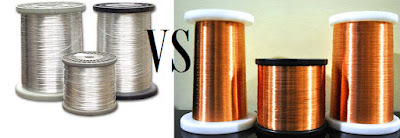
Understanding The Difference Between Bare Copper Wire & Tinned Wire

In today’s date, copper is widely used as a metal in wide varieties of applications. However, based on the nature of the application for which copper is used, the nature of the metal used will vary. In some cases, bare copper wire can serve the purpose of the application, while in some others it has to be tinned. Asking which one is good will not gives any specific guarantees regarding the performance. There are good bare coppers and bad tinned wires and vice versa. As mentioned, it will largely depend on the purpose of the application, as a whole.

Bare Versus Tinned:

http://www.ganpatiengineering.com/
 

There are several controversies and opinions regarding the nature of the copper wire for different applications. Well, it is true that fresh and new bare wire made of copper can perform excellent, but at the same time, it can even oxidize quickly than the tinned ones. This in turn leads to the degeneration of the electrical performance.

As the metal is thinner, the chances of oxidation are more, and this in turn will create an impact on the application. In such a situation, it is often thought that tinned copper wire is an easy and effective way of keeping the conductor wire from getting oxidized. When copper is oxidized, it turns green, which in turn becomes a semi-conductor. This is definitely bad for good conducting bare copper wire.

There are two ways of preventing the process of oxidation. Something might be put over the metal to prevent air from reaching the surface. After all, air contains moisture, and a slight amount of moisture is enough for oxidation. When there is no air, there is no oxide, and hence no corrosion. Soldering wire can often help in sealing the copper. On the other hand, another way to prevent copper from getting oxidized is putting a layer of tin on the copper. Consequently, even when the insulation is stripped off, air will have a lesser chance to enter and cause the formation of copper oxide.

Problem With Tinned Wire:

However, tin layered copper wire also shows problems in the course of time with the increase in the frequencies of the wire. When the entire conductor is used, the tin layer can protect it. However, as frequencies go high, the amount of conductor used is less. Consequently, the tinned layer becomes prominent and affects the performance of the conductor.

It is important to remember that tin has almost about seven times the resistant capacity of copper. Therefore, if any application at 1MHz or higher should not contain any tinned coating. On the contrary, bare copper wire is ideal for the situation. This implies that video cables, category data cables or digital audio cables should be made of bare copper without any tinned coating on it. This is because they are used for high frequency applications. The tinned copper wires are usually preferable for low frequency applications, and they will tend to last longer.

Hence, understanding the application frequency is crucial in selecting the type of wire.

Friday, 18 March 2016

How To Bend Your Copper Pipe?

There are several reasons for which you might have to bend copper pipes. Even though several types of piping are available today, many people still prefer the traditional pipes made of copper. These can be used in behind walls and are available in the forms of rolls. If you want, you can mount them on the surface of the wall or bend them, as per your needs.

In fact, you might not be aware that there are several ways through which you can bend your copper pipes. Every time you may not require specialized plumbing tools for the same. Here are some of the specialized methods that you can follow in order to bend the pipes. 

http://www.ganpatiengineering.com/bunched-copper-wire.html


The useful tools for this purpose are:
  • Blow torch,
  • Dry sand and funnel
  • A vice
  • Bucket of cold water
  • Pipe benders
  • Pipe bending springs
  • A square to check the angle of bend.

Make sure that you always use protective gloves and safety glasses while carrying out this function.

Support During Bending:

Supporting the copper pipes during the bending process is essential in order to prevent them from getting collapsed or pleat. Make sure that regardless the method you follow, you support the pipe in some way or the other.

Using blow torches-

This is required in order to bend the tubing. You will have to solder the pipes so that bending is easily managed up to the desired temperature. However, if you have lots of pipe work to do, going for an oxy-acetylene torch will help in effective heating of the pipes to the point that they will bend the pipes.

Using pipe benders-

http://www.ganpatiengineering.com/braided-copper-wire.html
 

These are designed as per the sizes of the pipes. If you have different shaped pipes, you will have to invest in an entire set of pipe benders. This in turn will make the work accurate, easy and you will not need any kind of heating.

Using Pipe bending springs-

You can heat the copper pipe until it is red hot and achieves the length of the bend. The pipe can then be slipped into the spring easily so that you can bend the pipe supported by the spring. It is here that you will need to cool the pipes with a bucket of cold water. These springs can be less expensive than the pipe benders. Moreover, they can be stored and transported easily from one place to another. It is one time investment and you can use it whenever required.

Using sand for support-

You can bend copper pipes even with sand. Make sure that the sand is dry and fine. Block one end of the pipe with newspapers and fill it with sand. The sand should be compact. Air or moisture in the pipe will make the pipe fold and collapse. When you cannot put in any more send, block the other end, heat it until red hot and bend it manually.

These things can serve your purpose.

Monday, 19 October 2015

What makes Copper Pipes Unbeatable Choice for Varied Industries?


Copper can be regarded as an indispensable metal that is widely utilized in various industries all over the world in some form or the other. The most common use of copper has been found to be in the electrical industry. Copper has widespread popularity in that particular area for being good conductor of electrical charge. However, copper as a metal has other varied and important uses as well. Copper being a metal is malleable and ductile. These factors make it an important constituent in plumbing as well as architectural use. One such popular use of copper is in the form of copper pipes.


Copper Pipes: A Brief Introduction to the Features
Copper Pipes or tubes have widespread popularity for the movement of various kinds of materials through them. Apart from being, a good electrical and thermal conductor copper has a good name for being resistant towards various adverse factors.  These factors include corrosion, atmospheric fluctuations, thermal damage and many more.

Copper Pipes are available in two primary forms:
•    Hard or Drawn Copper Pipes and Tubes
•    Soft or Annealed Copper Pipes and Tubes
Both these forms of copper pipes are utilized as per the dictates of the requirements mentioned for the project where they are used.
The primary features of copper tubes or pipes are listed as follows:
•    Copper pipes have been procured to be versatile in their performance
•    They are available in a wide range of lengths, diameters and shapes. Moreover, all these feature can be customized as per the requirements of the projects.
•    The performance of copper pipes in the various areas have been found to be practically flawless
•    The life cycle of copper pipes is comparatively long
•    Copper pipes have negligible maintenance
•    The resistance towards corrosion in any form is found to be high in copper pipes
•    The thermal conductivity of copper pipes is found to be good, which makes it an important constituent in HVAC systems
•    Installation and customization of copper pipes and fittings is found to be quite easy
•    The cost effectiveness of copper is found to be affordable as per its performance when copper pipes are considered for various projects
Uses of Copper Pipes
The applications where a copper pipe is found out to be a primary constituent include:
•    Water Supply as well as distribution Systems both superficial as well as underground
•    Gas Services that require underground plumbing
•    HVAC Systems including air cooling as well heating for buildings
•    Refrigerators use copper pipes extensively for their cooling units
•    Solar Heating Systems where thermal conductivity is required
•    Systems those are responsible for supply and distribution of fuel oils
•    Supply Systems for Oxygen as well as other medical gases, which are non-inflammable
•    Reinforcement system in concrete for buildings where iron cannot be used for atmospheric conditions like the coastal areas
•    Decorative agents for interior design in building as well as the exterior parts as well

Copper pipes must be chosen with care and consideration before using them for the specified requirements.